
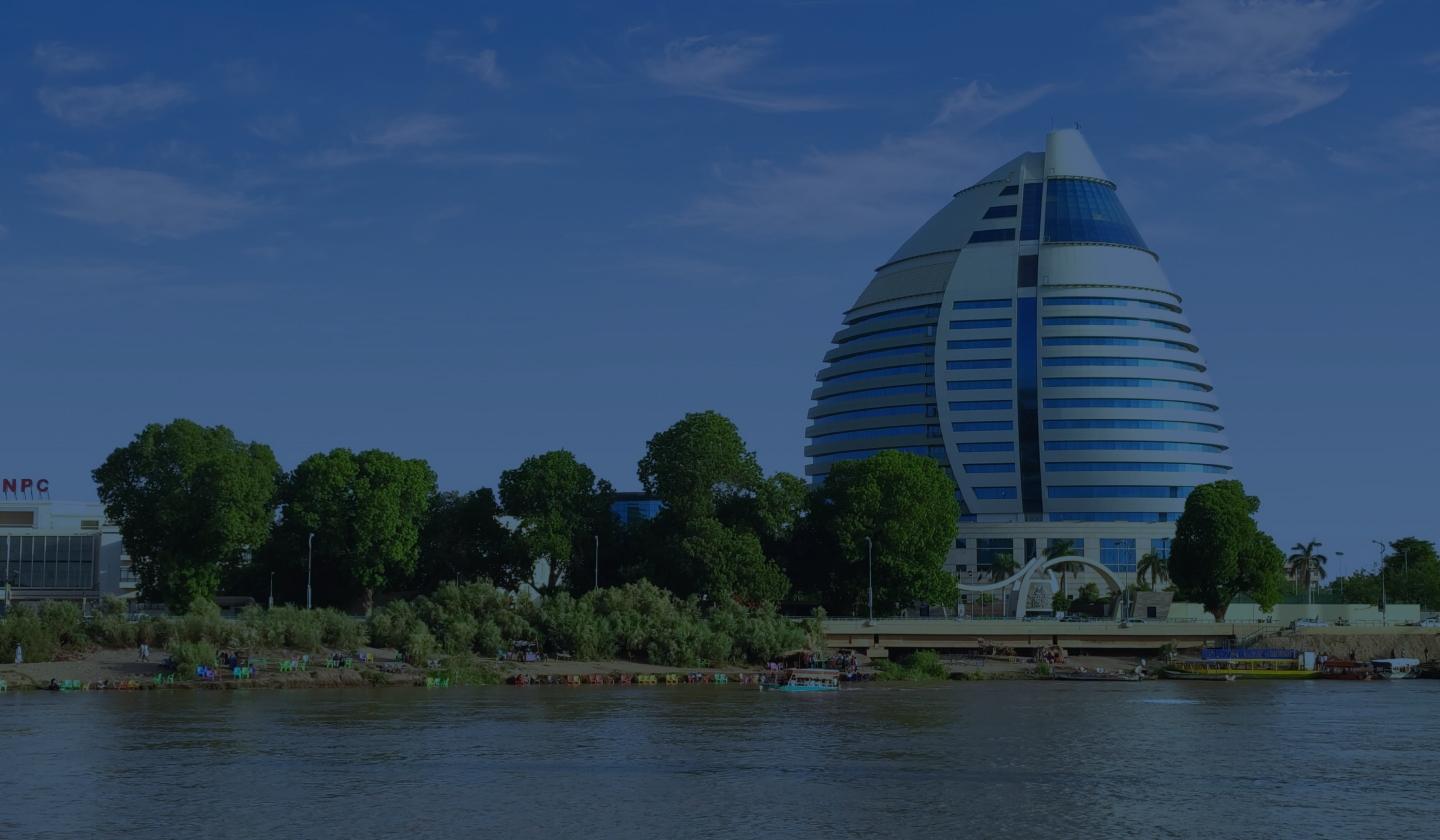
From onboarding to payroll management, Tarmack’s EOR services make hiring in Sudan fast, compliant, and cost-effective.
Employment Norms in Sudan
Sudan is a country located in northeastern Africa. It is a favored destination for immigrants due to its welfare rules and regulations. It draws a large number of talented individuals from around the globe. EOR services partner with employers to bridge the gap and guarantee legal compliance. It also aids employee management.
General Information:
- The Sudan currency is the Sudanese Pound
- Khartoum is the capital of Sudan.
- Arabic and English are the official languages of Sudan. Documentation can be done in both Arabic and English.
- As of 2022, the GDP of Sudan was reported to be USD 173 billion.
South Sudan has labor and employment laws. It applies to both residents and foreigners.
Table of Contents
- Agreements
- Onboarding Process
- Visa
- Minimum Wage
- Payroll Cycle
- Annual Bonus
- Health Benefits
- Working Hours and Overtime
- Leaves
- Social Security
- Taxes for Employers
- Taxes for Employees
- Probation
- Termination
- Severance Pay
- Employees or Contractors
- Final Words
AgreementsOnboarding ProcessVisaMinimum WagePayroll CycleAnnual BonusHealth BenefitsWorking Hours and OvertimeLeavesSocial SecurityTaxes for EmployersTaxes for EmployeesProbationTerminationSeverance PayEmployees or ContractorsFinal Words
Agreements in Sudan
- The organization must write and set employment contracts longer than three months. The employment contract is written in three copies. One copy is sent to the agency of employment. The employer and the employee must sign and keep the remaining two copies.
- If there is no written agreement between the parties, the employee may prove his claim using proof acceptable to both parties.
- Agreements are written in either Arabic or English. The jurisdictions recognize both languages. The contract needs to be written according to the situation and the desires of both parties.
- The notice period during contract termination must be fair and predetermined.
Onboarding Process in Sudan
- In Sudan, there are no specific laws governing the onboarding procedure. However, the entire procedure might take 7–14 days.
- Employers can check employees' backgrounds, and both parties can sign contracts or agreements
- Before starting work, certain mandatory documents must be presented:
- A legitimate government-issued picture ID
- Permit to work (if applicable)
- Additional paperwork related to the job that the company has asked for.
Hire International Employees Compliantly
Get StartedVisa in Sudan
Sudan has three types of work permits:
Employment visa: To work in Sudan, foreigners must acquire an employment visa.
Business visa: To visit Sudan for business purposes and attend exhibitions or commercial events. Proof of the individual's business is required, and the visa remains valid for up to three months.
Tourist visa: To visit Sudan for recreational purposes, foreigners must obtain a tourist visa.
Minimum Wage in Sudan
The minimum wage in Sudan is 425 Sudanese Pounds per month, applicable to all workers.
Payroll Cycle in Sudan
In Sudan, the standardized payroll cycle is monthly.
Streamline Global Payroll Instantly
Explore PayrollAnnual Bonus in Sudan
Employers don't need to provide an annual bonus to employees. Companies can provide performance bonuses as per their compensation package.
Health Benefits in Sudan
- Sudan has two types of health insurance available: Social Health Insurance (SHI) and Private Health Insurance (PHI).
- Employers in the formal sector are obligated to contribute to the National Health Insurance Fund (NHIF).
- It is voluntary for employers in the informal sector and small companies with ten or fewer employees to have NHIF.
Working Hours and Overtime in Sudan
- Work hours: In Sudan, either 48 hours a week or 8 hours daily.
- Break: Half an hour per day for eating or resting. No employee can be made to work for more than four consecutive hours.
- Overtime: Employees in Sudan can work up to 4 hours a day or 12 hours per week. Overtime is compensated as follows:
- 1.5 times their regular wage per hour on regular working days.
- Twice their regular wage per hour on official holidays.
Leaves in Sudan
The employees in Sudan are entitled to different types of leaves based on their contracts:
Sick leaves: An employee gets 12 days for a year of continuous service. The company pays the entire salary for the initial three months. It's a partial payment for three months and unpaid after nine months.
Parental leaves: Female employees can get fully paid maternity leave. The leave includes before and after the confinement certified by a doctor, four weeks each, or only two weeks before and six weeks after if preferred. However, paternity leave is not mandatory.
Annual leaves: Employees in Sudan are entitled to paid annual leave for each year of their service. Employees who take two years of annual and unused leave days can receive half of their payroll as compensation. In the event of termination, employees are entitled to full financial compensation for unused annual leave days
- 1-3 years of service: 21 days of annual leave
- 3-15 years of service: 25 days of annual leave
- 15+ years of service: 30 days of annual leave
Public Holidays (for the Calendar year 2024)
Some dates may vary based on official notifications and traditional calendars.
- Independence Day - 1st January
- Coptic Christmas - 7th January
- Coptic Easter - 1st April
- Eid-Ul-Fitr - 10th-13th April
- Eid-al-Adha - 17th-21st June
- Muharram - 7th July
- Prophet Muhammad's Birthday - 15th September
- Christmas Day - 25th December
Public Holidays (for the Calendar year 2025)
Some dates may vary based on official notifications and traditional calendars.
- Independence Day - 1st January
- Coptic Christmas - 7th January
- Coptic Easter - 21st April
- Eid-Ul-Fitr - 29th March-1st April
- Eid-al-Adha - 7th-11th June
- Muharram - 17th June
- Prophet Muhammad's Birthday - 6th September
- Christmas Day - 25th December
Taxes for Employers in Sudan
- Many employers will manage the taxes using the PAYE (pay-as-you-earn) system if you have a permanent job in Sudan. This implies that they will calculate and process your taxes in Sudan before sending you a net wage.
- The corporate income tax rates in Sudan are a sum of social security and health insurance with:
- 17% for social security contribution
- 8% for health insurance contribution.
Taxes for Employees in Sudan
In Sudan, employment income, all business profits, real estate leasing revenue, and personal income from all sources are all taxable to residents.
- Only income with a Sudanese source is taxed for non-residents.
- In most cases, employment income is taxable unless it is exempt.
- Leasing income, other investment income, and business gains made by a person through their trade or profession are all taxable.
- Personal income as well as corporate and professional earnings are taxed at progressive rates ranging from 5% to 15%.
- Real estate lease income and other non-regular income are taxed at a 10% rate
Like the employers in Sudan, employees shall also pay for their social security and health insurance funds:
- 8% for social security contribution
- 4% for health insurance contribution.
Employees are also required to pay income tax on their earnings. The tax rates are determined by the employee's income level. The higher earners pay a more significant percentage of their income as tax. The tax slab is charged as follows:
- Those earning income (SDG) per year are taxed at a rate of -
- Up to 3000: 0%
- 3001 - 6000: 5%
- 6001 - 10000: 10%
- Over 10001: 15%
Calculate True Employee Costs Now
Calculate NowProbation in Sudan
- The probationary period shall not exceed three months.
Termination in Sudan
- Several factors can lead to the termination of an employment contract. An employee's contract may be terminated if they do not complete assignments on time and with due diligence. An additional reason for termination may be an inability to work again owing to illness.
Severance Pay in Sudan
According to the 1990 Social Security Act, an employee who worked for not less than three years shall enjoy a severance pay:
- For service of 3-10 years, a basic monthly wage for every year of service.
- For more than ten years, 1.5 times the basic monthly wage per year from five years.
- Beyond 15 years of service, it should be 1.75 times the basic wage per additional year. But this should not exceed the basic wage for 36 months.
Employees or Contractors in Sudan
- In Sudan, people can be employed as full-time or contractors. They are on a payroll and avail benefits like annual leave, overtime pay, probationary period, sick leave, public holidays, maternity leave, severance pay, and notice period.
Final Words
In Sudan, the line separating the formal and unofficial economies is diminishing. Urban areas' formal economy has slowed down, and city migration has increased. This has given an immense opportunity for business expansion. EOR services provide a simple means to avail of this opportunity.
See Transparent EOR Pricing
View PricingExplore Hiring & Payroll In Other Countries
Employer of Record in United StatesEmployer of Record in SingaporeEmployer of Record in IsraelEmployer of Record in PortugalEmployer of Record in LatviaEmployer of Record in CanadaEmployer of Record in FinlandEmployer of Record in United Arab EmiratesEmployer of Record in MaltaEmployer of Record in ChileEmployer of Record in AustraliaEmployer of Record in New ZealandEmployer of Record in QatarEmployer of Record in GreeceEmployer of Record in MalaysiaEmployer of Record in GermanyEmployer of Record in IrelandEmployer of Record in Saudi ArabiaEmployer of Record in EstoniaEmployer of Record in South AfricaEmployer of Record in United KingdomEmployer of Record in LuxembourgEmployer of Record in Hong KongEmployer of Record in Czech RepublicEmployer of Record in BrazilEmployer of Record in SwitzerlandEmployer of Record in FranceEmployer of Record in TaiwanEmployer of Record in PolandEmployer of Record in MexicoEmployer of Record in SwedenEmployer of Record in BelgiumEmployer of Record in PhilippinesEmployer of Record in ArgentinaEmployer of Record in NorwayEmployer of Record in AustriaEmployer of Record in CyprusEmployer of Record in HungaryEmployer of Record in ThailandEmployer of Record in DenmarkEmployer of Record in JapanEmployer of Record in SpainEmployer of Record in SlovakiaEmployer of Record in ChinaEmployer of Record in NetherlandsEmployer of Record in South KoreaEmployer of Record in ItalyEmployer of Record in Lithuania
+ 38 moreA truly global HR platform with everything you need to build, grow & manage a global team.
- Identifying & recruiting the best talent
- Payroll with full compliance across 100+ countries
- Employment agreements as per local laws
- Contractor invoices & time management
- Smooth remote onboarding of employees
- Immigration & mobility services around the world

Social Security in Sudan
