
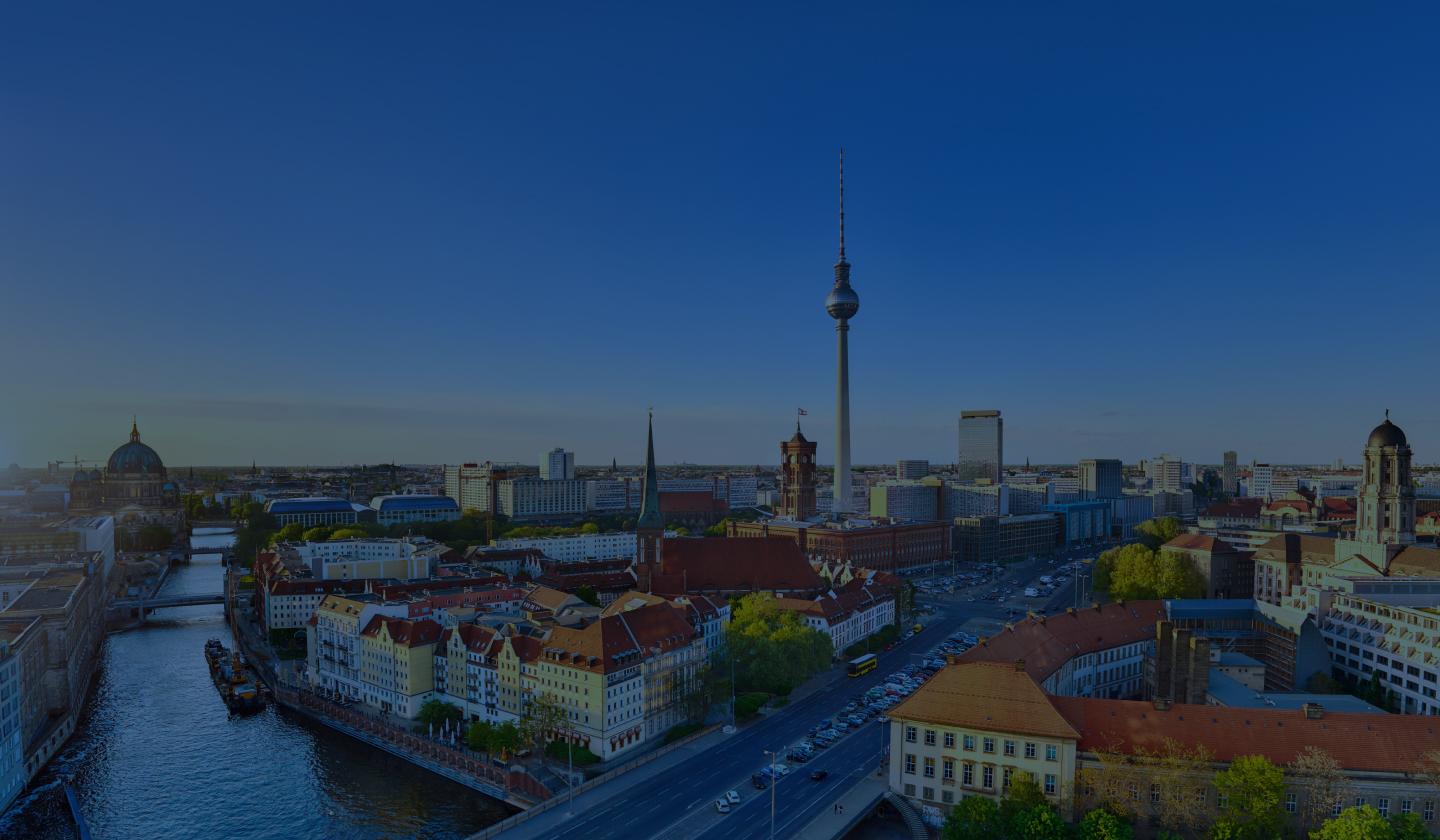
From onboarding to payroll management, Tarmack’s EOR services make hiring in Germany fast, compliant, and cost-effective.
Employment norms in Germany
Germany is a popular destination for global talent. This is mainly due to its employee-friendly laws. EOR services bridge the gap between employers who do not have access to a legal entity and employees, ensuring legal compliance. The EOR (Employer on Record) service handles all employee responsibilities, payrolls, benefits, taxes, and HR, allowing companies to focus on their goals.
General Information:
- Euro (EUR) is the currency of Germany
- Berlin is the capital of the country.
- German (Deutsch) is the official language; English and French are also spoken in some regions.
- As of 2022, the GDP of Germany was reported to be USD 4.03 trillion.
Table of Contents
- Agreements
- Onboarding Process
- Visa
- Minimum Wage
- Payroll Cycle
- Annual Bonus
- Health Benefits
- Leaves
- Working hours and overtime
- Social Security
- Taxes for Employers
- Taxes for Employees
- Probation
- Termination
- Severance Pay
- Employees or Contractors
- Final Words
AgreementsOnboarding ProcessVisaMinimum WagePayroll CycleAnnual BonusHealth BenefitsLeavesWorking hours and overtimeSocial SecurityTaxes for EmployersTaxes for EmployeesProbationTerminationSeverance PayEmployees or ContractorsFinal Words
Agreements in Germany
- In Germany, contracts or agreements are negotiated between the employee and the employer in case of high-level jobs or positions in which employees are not hired as a group. The negotiations generally take place between the two parties only.
- In the case of industries such as manufacturing, unions or employee associations negotiate contracts or agreements on behalf of all employees.
- The contracts determine the period of employment, post which the contract must be renewed as and if required.
- For official purposes, the contract must be drafted or translated into German (Deutsch).
Onboarding Process in Germany
- The onboarding process for German employees can take 6 business days or till the end of the probation period. The process begins once the work contract has been signed and the start date (of employment) is accepted.
- Certain important documents are required before beginning work -
- Residence Permit (for foreign nationals)
- Work Visa (if applicable)
- A clean record (from the police department of the employee's home country)
- Other work-pertinent documents requested by the employer
Hire International Employees Compliantly
Get StartedVisa in Germany
Work Visa
- Standard application documents (as stipulated by the German Embassy)
- Signed contract from the German employer
- Health insurance (If compulsory health insurance is not included, travel health insurance should be presented until the beginning of the employment)
Residence Permit
Foreign employees require a residence permit and a work visa to begin working in Germany. The permit is valid until the time stipulated in the work contract.
Freelancer Visa
Germany has a separate visa for freelancers. Along with the other common documents for visas, freelancers have to submit additional documents like recommendation letters from previous employers, authorization, commitment letters to future employers/customers, proof of financial means, freelance plans, etc.
Business Visa
- This is a short-stay Schengen Visa. It can either be valid until 90 days (multiple entries) for every 6 months or a single entry visa valid until the stipulated time.
- The visa application also requires an invitation letter from the business partner and details about the company the person is working in.
Minimum Wage in Germany
The German Minimum Wage Act states that the minimum wage must be EUR 12.00 per hour, which is about EUR 2100 per month (as of October 2022). The minimum wage is updated every 2 years.
Payroll Cycle in Germany
The payroll cycle in Germany is monthly.
Streamline Global Payroll Instantly
Explore PayrollAnnual Bonus in Germany
There is no mandatory bonus in Germany. However, it is very common for employers to pay an extra wage of one month at the end of the year, called the "13th Paycheck."
Health Benefits in Germany
It is mandatory to have health insurance in Germany; even those visiting must have health insurance coverage. Germany has a state-run public health insurance scheme in which most of the population is enrolled.
Some people earning high salaries may opt for private insurance for better benefits.
Leaves in Germany
Sick Leave
Germany does not have a maximum limit of days for sick leave. The employee will receive a 100% salary for the first 6 weeks of sick leave. After that, the health insurance company is to cover the leave.
Sick Leave for Child
In case a child is sick, their parents can get 30 days of paid leave per working parent.
Maternity Leave
Pregnant employees are granted a 100% paid leave of 14 weeks (6 weeks before childbirth and 8 weeks after).
Parental Leave
German employees are entitled to a parental leave of up to 3 years (until the child turns 3).
The parents (if both are employed) can take the leave at the same time or alternately.
Annual Leaves
A minimum time-off of 20 days is provided annually for employees working 5 days per week.
For those working 6-day weeks, the annual time off is 24 days.
Public Holidays (for the Calendar year 2024)
These dates may change as per official government announcements.
- New Year's Day - 1st January
- Good Friday - 29th March
- Easter Monday - 1st April
- Labor Day - 1st May
- Ascension Day - 9th May
- Whit Monday - 20th May
- German Unity Day - 3rd October
- Christmas Day - 25th December
- Boxing Day - 26th December
Public Holidays (for the Calendar year 2025)
These dates may change as per official government announcements.
- New Year's Day - 1st January
- Good Friday - 19th April
- Easter Monday - 22nd April
- Labor Day - 1st May
- Ascension Day - 30th May
- Whit Monday - 9th June
- German Unity Day - 3rd October
- Christmas Day - 25th December
- Boxing Day - 26th December
Working hours and overtime in Germany
- Work-day: A typical working week in Germany consists of 40 hours with an average work day of 8 hours.
- Break: A 30-minute break is mandatory if an employee works 6 to 9 hours. The break time is extended to 45 minutes if the work time is more than 9 hours.
- Overtime: A maximum number of 10 working hours are permitted per day. Overtime of 2 hours a day or 12 hours a week is allowed. The same hourly wage is paid for overtime hours as well. An employer may also choose to compensate for overtime through paid time-offs.
Taxes for Employers in Germany
Approximately 22.3% of the employee's salary is calculated for costs to the employer. The breakdown is as follows.
Social Security Tax (19.3%)
- Retirement - 9.30%
- Health Insurance - 7.30%
- Unemployment Security - 1.20%
- Long-term Insurance Fee - 1.53%
Other Taxes
- Accident security - 2.0% (for certain industries)
- Maternity - 1.0% (if applicable - depending on the health insurance)
Taxes for Employees in Germany
The employer withholds and pays the taxes on behalf of the employees. However, employees may claim an income tax refund if they feel they have paid more.
Income Tax
German employees are taxed from 0% to 45% based on their monthly wages, tax class, etc. The average income tax percentage breakdown is as stated below.
- Up to EUR 9,408 - 0% taxation
- EUR 9,409 - EUR 57,051 - 14%
- EUR 57,052 - EUR 270,500 - 42%
- EUR 270,501 and above - 45%
Social Security Tax
The social security tax is split equally between the employee and the employer. Employees pay an average of 19.3% of their wage towards social security, while the other 19.3% is paid by the employer.
- Retirement - 9.30%
- Health insurance - 7.30%
- Unemployment security - 1.20%
- Long-term insurance fee - 1.53%
Church Tax
Employees affiliated with a church have to pay an additional 8-9% church tax.
Calculate True Employee Costs Now
Calculate NowProbation in Germany
German employment contracts generally include a probation period of up to 6 months. If the employer wishes to terminate the employee, a two-weeks notice must be provided.
Termination in Germany
German laws for termination of employment are strict and protect employees against dismissal. Hence, employers or employees must provide a credible reason for the termination of the contract.
The notice period ranges from 4 weeks to 7 months based on the time the employee has worked for the employer. However, a 2-month notice is standard if the employee has worked for 7 years or less. A 3-month notice is generally provided if the employee has worked for more than 7 years.
A separation agreement must be signed by both the employee and the employer for contract termination.
Severance Pay in Germany
There are no separate laws for severance pay in Germany.
Employees or Contractors in Germany
- Full-time employees are those who are on a payroll and are included in the social security system. Their taxes are withheld from their paychecks by the employer who pays taxes on their behalf.
- Independent contractors are hired on a project-to-project basis and are not a part of the social security system. They are responsible for filing their taxes (which also include VAT and other applicable trade taxes) themselves without any risk to the employer. They are also required to have mandatory health insurance and pension insurance is also recommended.
- Misclassification: An employer must correctly notify if they are hiring full-time employees or contractors or risk being heavily fined. Misclassification may be seen as an effort to evade taxes or deprive workers of social security insurance benefits.
Final Words
Despite complex laws, Germany continues to be a sought-after destination for the expansion of many businesses. EOR facilities by the company ensure that foreign businesses can tap into Germany's talent pool hassle-free and be legally compliant.
See Transparent EOR Pricing
View PricingExplore Hiring & Payroll In Other Countries
Employer of Record in United StatesEmployer of Record in SingaporeEmployer of Record in IsraelEmployer of Record in PortugalEmployer of Record in LatviaEmployer of Record in CanadaEmployer of Record in FinlandEmployer of Record in United Arab EmiratesEmployer of Record in MaltaEmployer of Record in ChileEmployer of Record in AustraliaEmployer of Record in New ZealandEmployer of Record in QatarEmployer of Record in GreeceEmployer of Record in MalaysiaEmployer of Record in IrelandEmployer of Record in Saudi ArabiaEmployer of Record in EstoniaEmployer of Record in South AfricaEmployer of Record in United KingdomEmployer of Record in LuxembourgEmployer of Record in Hong KongEmployer of Record in Czech RepublicEmployer of Record in BrazilEmployer of Record in SwitzerlandEmployer of Record in FranceEmployer of Record in TaiwanEmployer of Record in PolandEmployer of Record in MexicoEmployer of Record in SwedenEmployer of Record in BelgiumEmployer of Record in PhilippinesEmployer of Record in ArgentinaEmployer of Record in NorwayEmployer of Record in AustriaEmployer of Record in CyprusEmployer of Record in HungaryEmployer of Record in ThailandEmployer of Record in DenmarkEmployer of Record in JapanEmployer of Record in SpainEmployer of Record in SlovakiaEmployer of Record in ChinaEmployer of Record in NetherlandsEmployer of Record in South KoreaEmployer of Record in ItalyEmployer of Record in LithuaniaEmployer of Record in India
+ 38 moreA truly global HR platform with everything you need to build, grow & manage a global team.
- Identifying & recruiting the best talent
- Payroll with full compliance across 100+ countries
- Employment agreements as per local laws
- Contractor invoices & time management
- Smooth remote onboarding of employees
- Immigration & mobility services around the world

Social Security in Germany
