
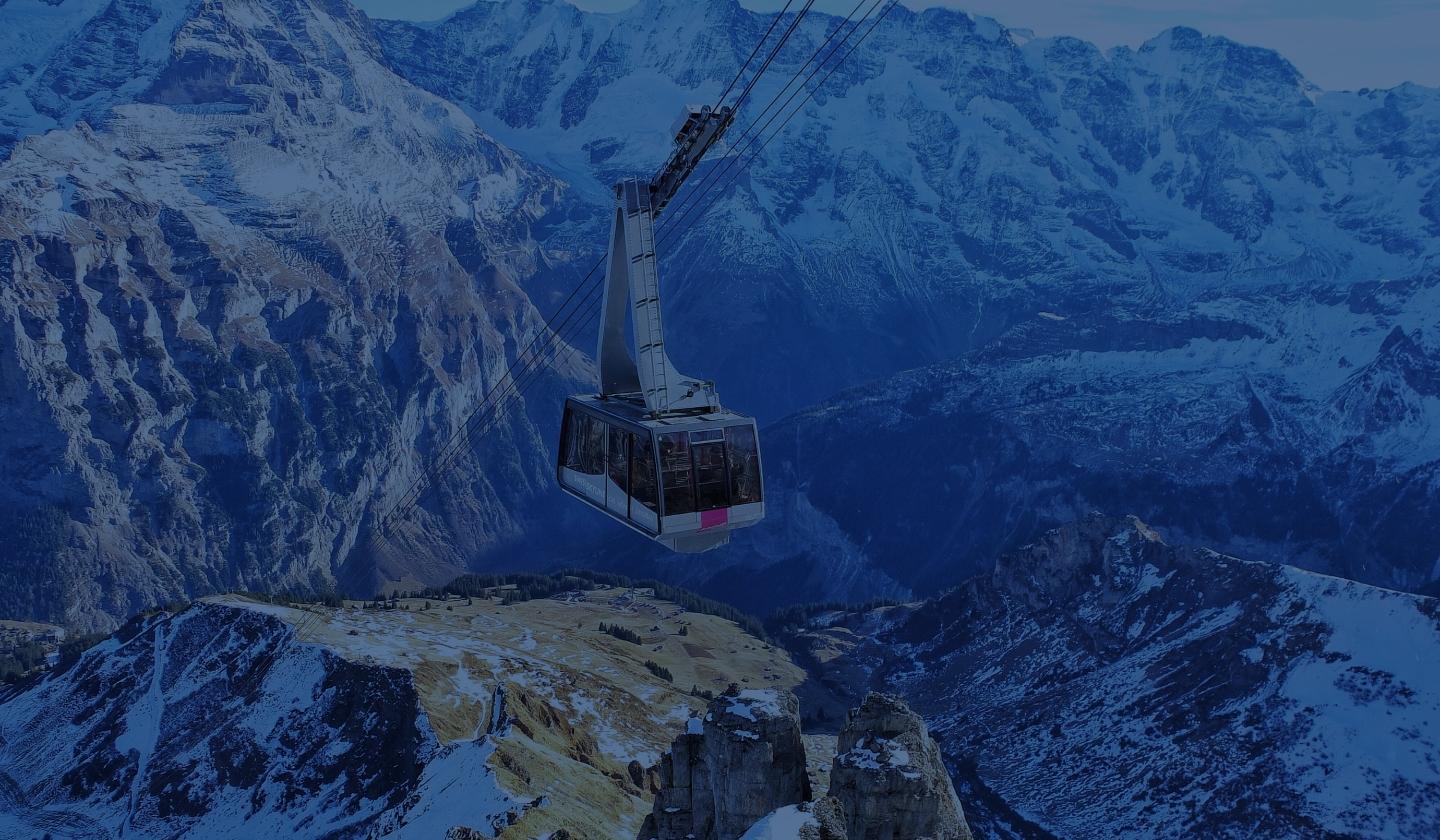
Employer of Record in Switzerland: Hire, Manage, and Pay Talent Seamlessly
Get StartedFrom onboarding to payroll management, Tarmack's EOR services make hiring in Switzerland fast, compliant, and cost-effective.
Employment Norms in Switzerland
Switzerland enjoys high economic growth, which lures employees from around the globe. Besides, It also has high GDP per capita and a free market economy. All these make Switzerland a hub of skilled manpower and an excellent destination for business expansion. However, expanding business in Switzerland without sound knowledge of employment norms can be complex. EOR services simplify it with legal compliance, procedures, and hiring assistance.
General Information:
- Switzerland's currency is the Swiss Franc (CHF).
- Bern is the capital of Switzerland.
- German, French, and Italian are the official languages of Switzerland. Documentation can be in Documentation can be done in any of its official languages - German, French, and Italian.
- As of 2021, the GDP of Switzerland was reported to be USD 800 billion.
To hire in Switzerland, you need a local office and bank account, and a registered subsidiary. Even misclassifying contractors and employees unintentionally can cause penalties in Switzerland.
Table of Contents
- Agreements
- Onboarding Process
- Visa
- Minimum wage
- Payroll Cycle
- Annual bonus
- Health Benefits
- Working Hours and Overtime
- Leaves
- Social Security
- Taxes for Employers
- Taxes for Employees
- Probation
- Termination
- Severance Pay
- Employees or Contractors
- Final Words
AgreementsOnboarding ProcessVisaMinimum wagePayroll CycleAnnual bonusHealth BenefitsWorking Hours and OvertimeLeavesSocial SecurityTaxes for EmployersTaxes for EmployeesProbationTerminationSeverance PayEmployees or ContractorsFinal Words
Agreements in Switzerland
- Written contracts are not mandatory in Switzerland. Agreements can also be done orally. But a contract is recommended for legal reasons.
- Certain agreements gain validity only after they are agreed upon and signed by both parties in written form.
- Contracts can be Individual, collective, or standard.
- Agreements can be drafted in any of the official languages of Switzerland, i.e., German, French, and Italian.
- Essential elements of a valid contract in Switzerland include employer details, enforcement date, work type, salary, duration, and terms and conditions.
- Contracts are legally binding upon both parties and are enforceable upon breach.
Onboarding Process in Switzerland
- The onboarding process involves tax, health, and medical insurance paperwork. It also includes deposit forms, Nondisclosure agreements, and security and confidentiality agreements, which might take months to complete.
- But with EOR service, you can complete the entire onboarding process within about 7 business days for Switzerland national.
- However, it might add 3 extra days due to the right-to-work assessment for non-nationals.
Hire International Employees Compliantly
Get StartedVisa in Switzerland
Switzerland has two different types of working visas:
- For non-members of the European Union (EU) or European Free Trade Association (EFTA), a job offer from a swiss employer is mandatory.
- For members of the EU and EFTA, a job offer is not mandatory. They can first enter Switzerland with proof of active job search. However, they must engage in a job within 3-6 months.
Minimum wage in Switzerland
- There is no standard national minimum wage in Switzerland.
- The wage varies per canton (district), ranging from CHF19-24 per hour.
Payroll Cycle in Switzerland
Payments are made monthly in Switzerland. Generally, it is done on the last working day of each month.
Streamline Global Payroll Instantly
Explore PayrollAnnual bonus in Switzerland
- An annual bonus is not customary in Switzerland.
- However, employers may give employees incentives at the year's end.
Health Benefits in Switzerland
- In Switzerland, Private health insurance is mandatory for all.
- Swiss law provides health and safety regulations to protect workers from injuries and accidents. It covers the protection of juvenile workers (children under 18), accident protection, and so forth.
- Similarly, employees can enjoy the perks of health, dental, and disability insurance with EOR service.
Working Hours and Overtime in Switzerland
- Work hours:As per Swiss law, the standard working hour is 40 hours per week.
- The workweek is from Monday to Friday.
- Break: 30-minute break is provided after 7 hours of work per day
- Overtime:Employees can work overtime for a maximum of 45-50 weeks hours.
Overtime payment is not mandatory unless provided in the contract. If paid, it shall be 125% of the hourly rate.
Leaves in Switzerland
Employees in Switzerland enjoy various types of leaves.
Sick Leave
- During the first year of employment, employees enjoy 3 weeks of sick leave. However, it extends along with employment duration.
- Most companies have an Insurance scheme for sick leaves. It provides coverage for about 720 days, allowing them to enjoy 80% of their salary during their leave.
Parental leaves
- Although swiss federal law provides maternal leave of 14 weeks, parental leave is not provided.
- Only a few cantons (districts) have provisions for paternal leave.
- However, upon employer consent, employees can enjoy 1-2 days of paternal leave.
Annual leaves
- Swiss law provides employees with a minimum of a 4-week vacation each year.
- However, employees under 20 enjoy a minimum of 5 weeks of vacation.
Public Holidays (for the Calendar year 2024)
Some dates may vary based on official notifications and traditional calendars.
- January 1 - New Year's Day
- March 29 - Good Friday
- May 9 - Ascension Day
- May 30 - Corpus Christi
- August 1 - National Day
- August 15 - Assumption Day
- November 1 - All Saints' Day
- December 8 - Immaculate Conception
- December 25 - Christmas Day
Public Holidays (for the Calendar year 2025)
Some dates may vary based on official notifications and traditional calendars.
- January 1 - New Year's Day
- April 19 - Good Friday
- May 30 - Ascension Day
- June 20 - Corpus Christi
- August 1 - National Day
- August 15 - Assumption Day
- November 1 - All Saints' Day
- December 8 - Immaculate Conception
- December 25 - Christmas Day
Taxes for Employers in Switzerland
There are various types of payroll taxes paid by employers in Switzerland. They are listed below:
- AVS Social Security- 5.125%
- Family compensation Fund- 1.2-3.6%
- Unemployment insurance (salary upto CHF148,200) - 1.10%
- Unemployment insurance (salary above CHF148,200) - 0.50%
- Accident Insurance - Varies
- Maternity Insurance- 0.043%
- Early Childhood Fund- 0.07%
- Total Employment cost- 11.038-19.438%
Taxes for Employees in Switzerland
Income tax rates for employees vary according to cantons, marital status, number of children, and so on.
- Switzerland has one of the lowest income taxes compared to neighboring countries.
- In Switzerland, Income tax is charged progressively at the federal and in most cantons.
- It has bracketed income tax system with 10 brackets.
- The tax rate differs for single and married couples, where couples enjoy a lower tax rate.
- For individuals, tax up to an income of CHF14,800 is levied, and for married couples, tax income of CHF28,800 is levied.
Direct Federal Income Tax for Married Couples is:
- CHF0- 28,800 = Levied
- CHF28,800 - 51,800 = 1%
- CHF51,800 - 59,400 = 2 %
- CHF59,400 - 76,700 = 3 %
- CHF76,700 - 92,000 = 4 %
- CHF92,000 - 105,400 = 5 %
- CHF105,400 - 116,900 = 6 %
- CHF116,900 - 126,500 = 7 %
- CHF126,500 - 134,200 = 8 %
- CHF134,200 - 139,900 = 9 %
Direct Federal Income Tax for Single filters
- CHF 0 - 14,800 = Tax Leived
- CHF 14,800 -32,200= 0.77%
- CHF 32,200 - 42,00= 0.88%
- CHF 42,200 - 56,200= 2.64%
- CHF 56,200 - 73,900= 2.97%
- CHF 73,900 - 79,600= 5.94%
- CHF 79, 200 - 105,500= 6.60%
- CHF 105,500 - 137,200= 8.80%
- CHF 137,200 -179,400= 11.00%
- CHF above 769,600= 11.50%
Employee Payroll Tax
- Social Security- 5.125%
- Unemployment insurance (salary upto CHF148,200) - 1.10%
- Unemployment insurance (salary above CHF148,200) - 0.50%
- Maternity Insurance- 0.043%
- Early Childhood Fund- 0.07%
Calculate True Employee Costs Now
Calculate NowProbation in Switzerland
- Typically, the probation period in Switzerland is 1-3 months.
- Employers can dismiss an employee with 7-day notice during this period.
Termination in Switzerland
- Termination is guided by the terms and conditions of the contract.
- It can be concluded voluntarily by the employee, upon mutual consent, and unilaterally by the employer.
- Unilateral termination is based on employee performance, disciplinary action, and the contract's expiration.
- Termination can also be done with a notice period ranging between 1-3 months.
- In case of illness or accident, termination is protected until the following period
- 1 year of service = 30 days
- 2-3 years of service = 90 days
- o Beyond 6 years of service = 180 days
Severance Pay in Switzerland
- Unless provided in the contract, severance pay is not required in Switzerland.
- However, employees who have served for more than 20 years and above 50 enjoy it.
Employees or Contractors in Switzerland
- Swiss law prohibits misclassifying employees and contractors.
- It is regulated by the Swiss Code of Obligations, the Federal Act on Assignments, and the Federal Act on Employee Assignment (FAEA).
- Misclassifying can cause fines and revocation of an employer's license.
Final Words
Expanding business in Switzerland is financially rewarding. However, going beyond employment norms can lead to penalties and legal implications. Thus, it is best to consult the EOR service or legal officer before venturing into business expansion in Switzerland.
See Transparent EOR Pricing
View PricingExplore Hiring & Payroll In Other Countries
Employer of Record in United StatesEmployer of Record in SingaporeEmployer of Record in IsraelEmployer of Record in PortugalEmployer of Record in LatviaEmployer of Record in CanadaEmployer of Record in FinlandEmployer of Record in United Arab EmiratesEmployer of Record in MaltaEmployer of Record in ChileEmployer of Record in AustraliaEmployer of Record in New ZealandEmployer of Record in QatarEmployer of Record in GreeceEmployer of Record in MalaysiaEmployer of Record in GermanyEmployer of Record in IrelandEmployer of Record in Saudi ArabiaEmployer of Record in EstoniaEmployer of Record in South AfricaEmployer of Record in United KingdomEmployer of Record in LuxembourgEmployer of Record in Hong KongEmployer of Record in Czech RepublicEmployer of Record in BrazilEmployer of Record in FranceEmployer of Record in TaiwanEmployer of Record in PolandEmployer of Record in MexicoEmployer of Record in SwedenEmployer of Record in BelgiumEmployer of Record in PhilippinesEmployer of Record in ArgentinaEmployer of Record in NorwayEmployer of Record in AustriaEmployer of Record in CyprusEmployer of Record in HungaryEmployer of Record in ThailandEmployer of Record in DenmarkEmployer of Record in JapanEmployer of Record in SpainEmployer of Record in SlovakiaEmployer of Record in ChinaEmployer of Record in NetherlandsEmployer of Record in South KoreaEmployer of Record in ItalyEmployer of Record in LithuaniaEmployer of Record in India
+ 38 moreA truly global HR platform with everything you need to build, grow & manage a global team.
- Identifying & recruiting the best talent
- Payroll with full compliance across 100+ countries
- Employment agreements as per local laws
- Contractor invoices & time management
- Smooth remote onboarding of employees
- Immigration & mobility services around the world

Social Security in Switzerland
